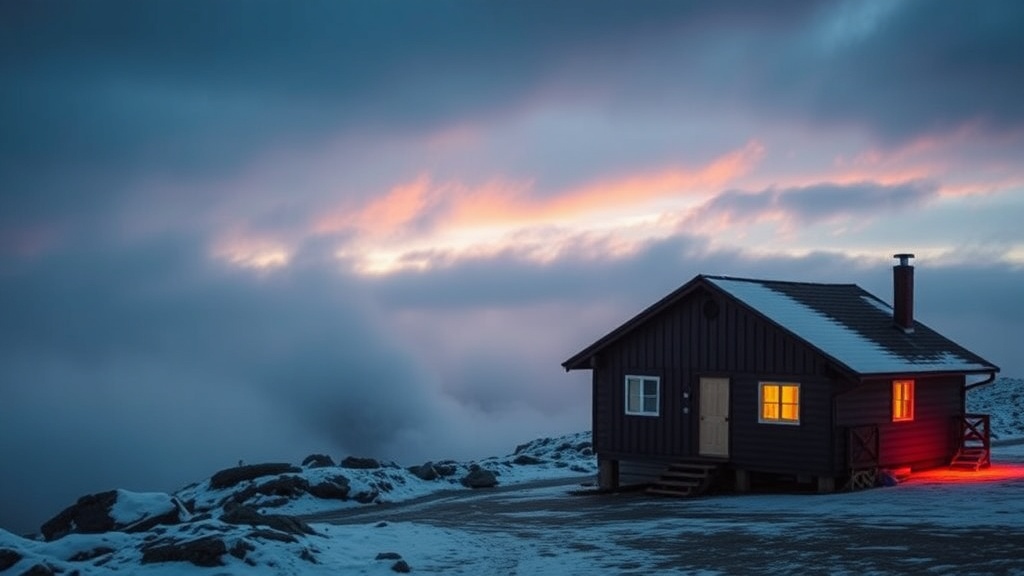
How to Prepare Your Home for Winter Storms on the Magdalen Islands

Why Do People Underestimate Gulf Storms?
There's a stubborn myth floating around that because we're surrounded by water, the Magdalen Islands somehow get "milder" winters than the mainland. Anyone who's spent January here knows that's nonsense—and dangerous nonsense at that. The Gulf of St. Lawrence doesn't coddle us; it throws everything it has at our shores. When the Environment and Climate Change Canada issues warnings for our archipelago, they're not being dramatic. They're being accurate.
Preparing your home for a Magdalen Islands winter isn't about panic-buying generators or boarding up windows every November. It's about understanding our unique geography—the way storms sweep across the dunes, how salt spray coats everything, and why a power outage here lasts longer than it would in Montreal. We're an isolated community, and that means self-reliance isn't optional. This guide walks through what locals actually do to keep their homes standing when the nor'easters roll in.
What Should You Check on Your Roof Before the First Snow?
Your roof takes the brunt of every storm that crosses the Gulf—and that's saying something when winds regularly hit 100 km/h. The constant salt-laden gusts wear down shingles faster here than almost anywhere else in Quebec. Walk around your property after a windy day and look for granules in your gutters or on the ground. That's your shingles crying for help.
Ice dams are our particular nemesis. The freeze-thaw cycles on the Magdalen Islands can be brutal, and when snow melts during a midday warm spell (relatively speaking) then refreezes at the eaves, water backs up under your shingles. The fix isn't glamorous—proper insulation and ventilation in your attic—but it's effective. Local contractors like those at Toitures Îles-de-la-Madeleine understand our specific challenges because they live with them too. Don't wait until February to discover your flashing is compromised.
Securing loose items before a storm isn't just about lawn furniture—though yes, bring that in too. Check your soffits, fascia, and any exterior fixtures. The wind here doesn't just blow; it finds weaknesses and exploits them. A loose piece of trim becomes a projectile, and a projectile becomes a hole in your siding. Walk your property with a critical eye before every major system.
How Do You Keep Pipes from Freezing in a Century Home?
Many of us live in homes built when fishing was the only industry worth mentioning—charming, drafty, and poorly insulated by modern standards. Freezing pipes aren't an inconvenience here; they're a catastrophe that can displace families for weeks. The hospitals in CISSS de la Gaspésie see more cold-related injuries during extended outages than most Quebec regions, and frozen plumbing is often the culprit.
Start with the obvious: insulate pipes in unheated spaces—basements, crawl spaces, exterior walls. But on the Magdalen Islands, you need to go further. Identify the coldest corners of your house (usually north-facing rooms) and keep cabinet doors open during cold snaps. Let faucets drip when temperatures drop below -15°C. Yes, it wastes water—but it wastes less than a burst pipe flooding your kitchen.
Know where your main water shut-off is. Test it twice a year. When a pipe does freeze—and "when" is more accurate than "if" for many of us—you need to stop the flow immediately. Keep a supply of pipe insulation and heat tape on hand; the hardware stores in Cap-aux-Meules stock out fast when a cold snap is forecast. Don't be the person driving to Havre-aux-Maisons in a blizzard because you need emergency supplies.
What Backup Power Options Actually Work Here?
Hydro-Québec crews do remarkable work, but we're at the end of a very long supply chain. When lines go down across multiple islands, restoration takes time. A wood stove isn't quaint décor in the Magdalen Islands—it's survival infrastructure for many families. If you don't have one, consider what you'll do when the thermometer drops and the lights stay off for 48 hours.
Portable generators are common, but using them safely requires planning. Never run one inside—not in the garage, not in the shed, not "just for a minute." Carbon monoxide is odorless and deadly. Keep enough fuel on hand for at least three days of intermittent use, and store it properly. The Quebec government resources on carbon monoxide poisoning should be required reading for every generator owner.
Battery backup systems are improving rapidly, and some Island residents are installing Tesla Powerwalls or similar systems paired with solar. It's a significant investment, but when you factor in the peace of mind during our frequent outages, the math starts to work. At minimum, keep charged power banks for phones, a battery-powered radio, and flashlights in multiple rooms. Candles are romantic until someone knocks one over in a drafty old house.
How Can Neighbors Help Each Other Prepare?
The real secret to surviving winter on the Magdalen Islands isn't individual preparation—it's community coordination. We check on our elderly neighbors before storms. We share generators, wood piles, and hot meals during extended outages. The community centers in each municipality open as warming stations when needed, but getting there in a blizzard isn't always possible.
Make a mental map of vulnerable households on your street—the elderly, families with infants, anyone with medical equipment that requires power. Exchange phone numbers. Establish a check-in protocol before the weather turns. When the wind is howling and the snow is horizontal, you don't want to be wondering if Madame Arseneau next door has heat.
Community resilience is what makes the Magdalen Islands livable year-round. The tourists leave in September, but we stay. We endure the gales, the isolation, the occasional feeling that the Gulf is personally offended by our presence here. And we do it together—sharing resources, information, and the occasional bottle of wine when the power's out and the candles are lit. That's not just storm preparation; that's Island life.